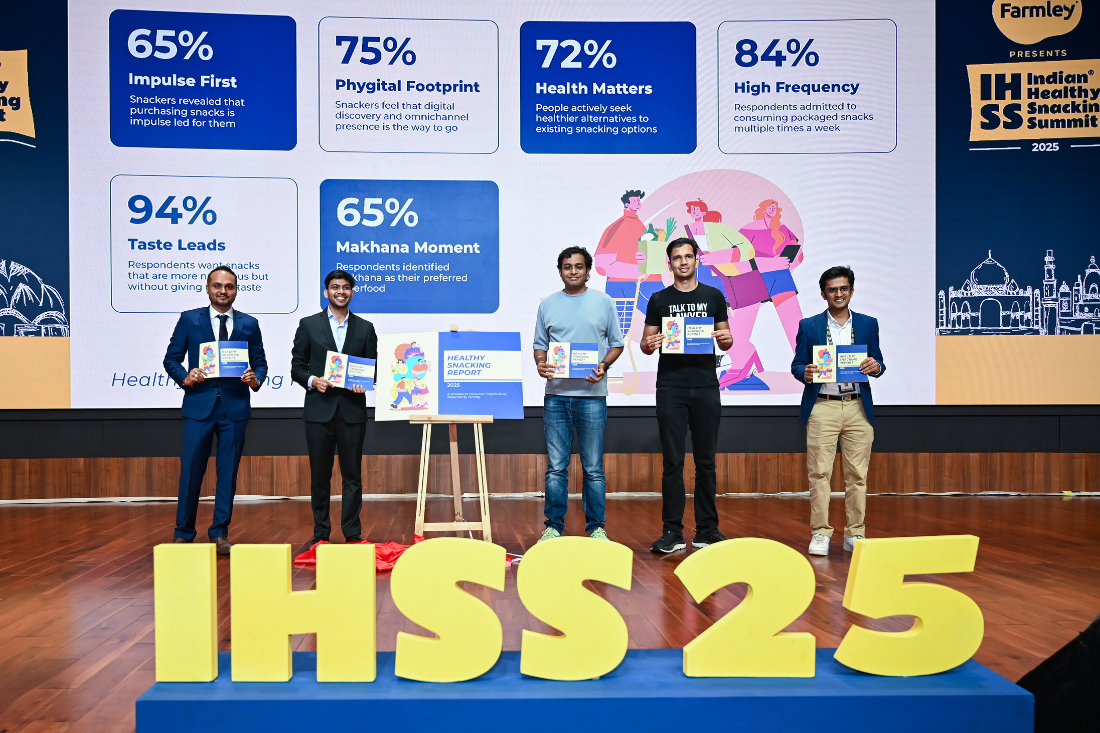
Farmley wanted to own the conversation in India's fastest-growing snacking category — so it commissioned an industry summit and an original consumer-research report, built from nothing. I owned creative direction end to end: a brand that had to read as independent enough for competitors to join and clearly Farmley's, a 65-page report that turned 6,000+ survey responses into something people actually read, and the full event system. Built in 60 days — then again, bigger, for edition two.
ROLE
Visual Designer · creative direction
TIMELINE
60 days / edition
EDITIONS
1.0 (2024) & 2.0 (2025)
RECOGNITION
APEDA · Ministry of Commerce
IMAGE
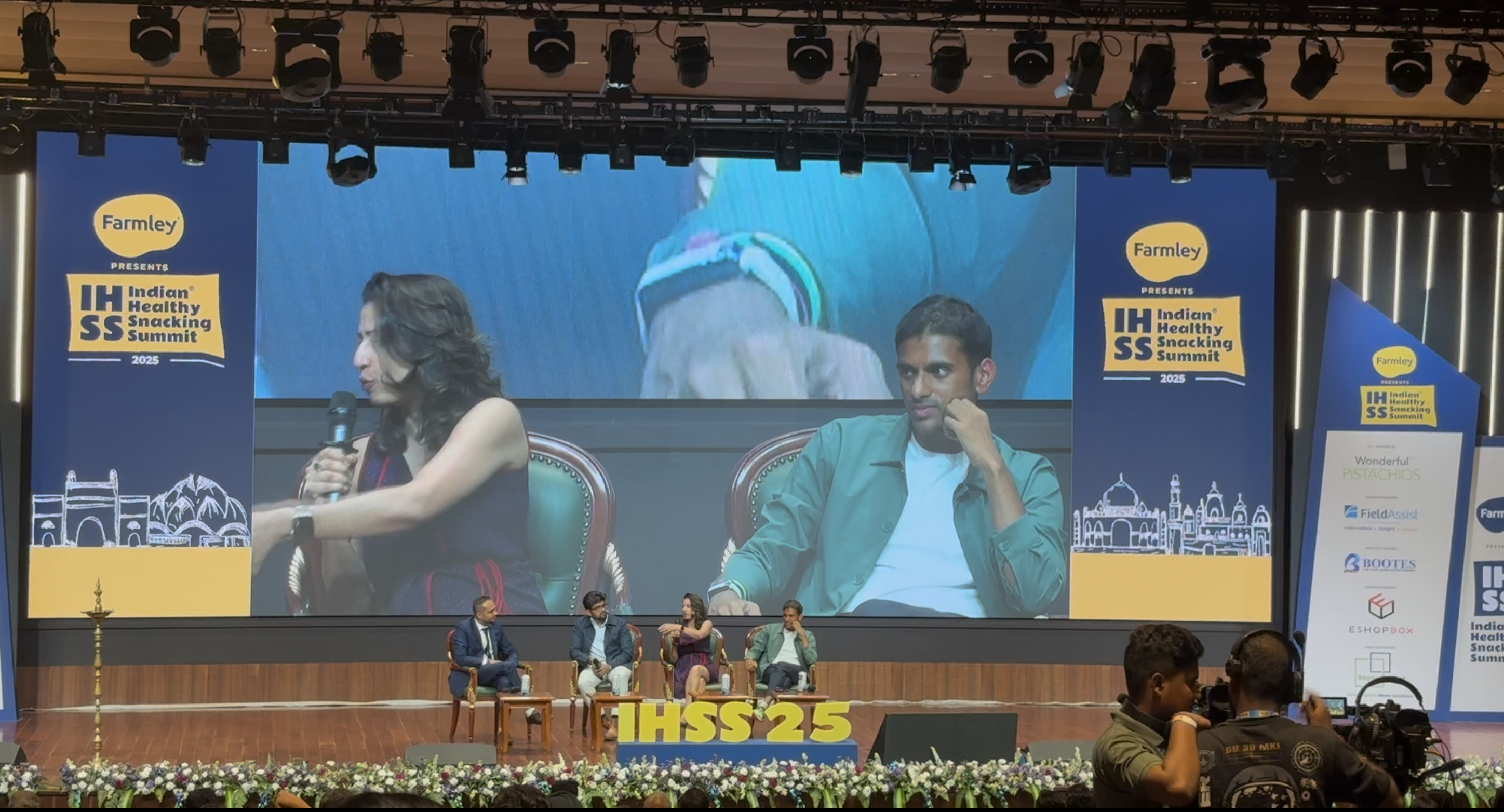
The inaugural summit, India Habitat Centre, New Delhi — recognised by APEDA, Ministry of Commerce.
60 days
per edition, built from zero
13,000+
consumers surveyed across editions
2,000+
report downloads, cited industry-wide
Govt-recognised
APEDA, Ministry of Commerce
01
Own the conversation
India's healthy snacking market is one of the country's fastest-growing food categories — pushed by urbanisation, rising health awareness, and higher disposable incomes. Farmley already led commercially. The bet here was different: don't just sell into the wave, own the conversation around it.
IHSS was that bet — an annual summit gathering food scientists, quick-commerce founders, influencers, investors, and policymakers, anchored by original consumer research Farmley commissioned, designed, and published. The catch: no name, no identity, no website, no report, no precedent. Just a 60-day deadline and a category to define.
02
Independent, but unmistakably Farmley
This is the part that makes IHSS a strategy problem, not a branding exercise.
The summit had to feel independent of Farmley — so competitors and the wider industry would actually participate. But it also had to feel unmistakably by Farmley — so Farmley earned the brand equity it was paying to build. Those two goals pull in opposite directions, and resolving the tension drove every design decision that followed. It wasn't a stylistic call. It was the brief.
03
The research the whole summit stood on
The report wasn't a literature review — it was original primary research I helped design and run, and it's the foundation the whole summit stood on. No credible data, no reason for the industry to show up.
The question.What actually drives how India snacks — across age, region, and profession — and where do stated intentions (people say they want to eat healthier) diverge from real behaviour (taste and cost quietly win)?
Mixed-method by design.Quantitative: a 25-question survey covering when people snack, which flavours they crave, and how price shapes the choice. Qualitative: interviews and on-ground observation to give the numbers context and catch what a survey can't. The two were built to check each other — the method was later described in national trade press.
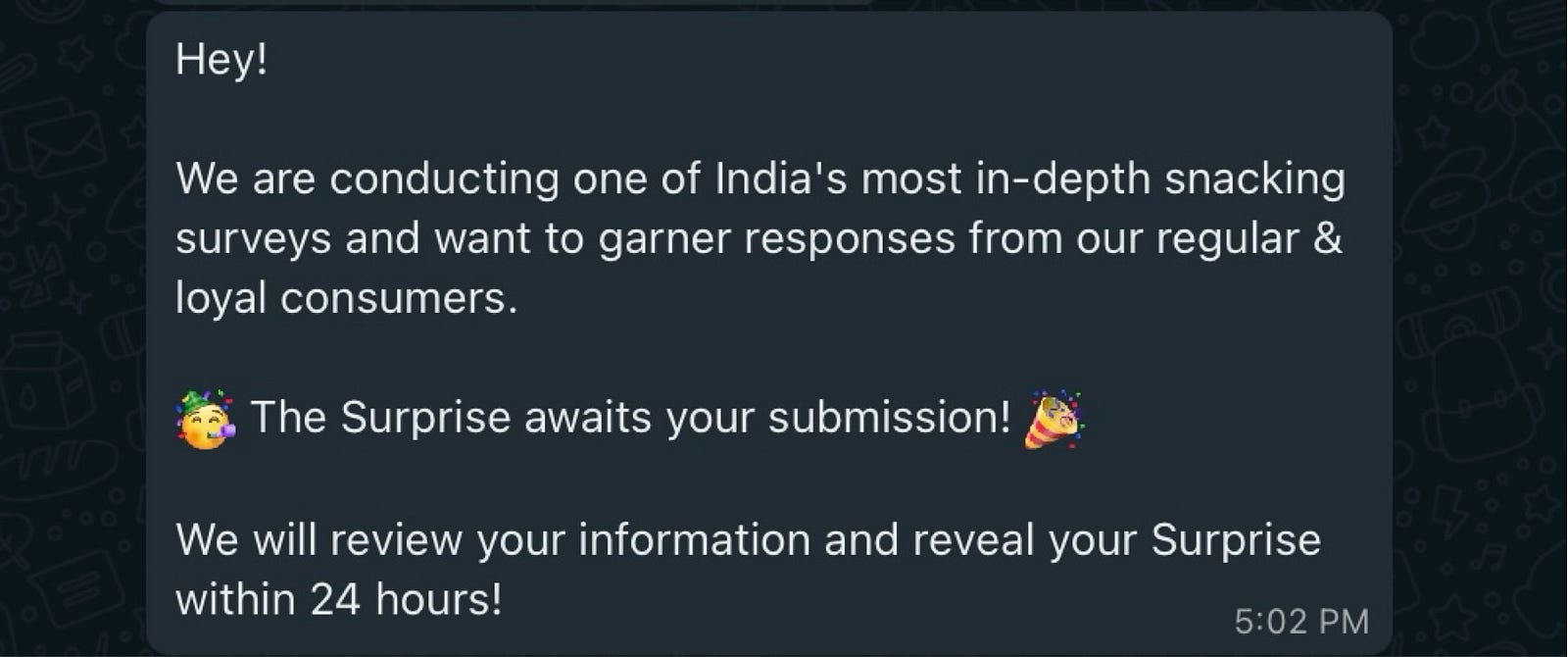
Recruitment was its own design problem.Reaching a broad, diverse sample quickly meant going multi-channel and incentivised: QR-code pop-up booths at offices and colleges (fill the form, get free makhana), WhatsApp outreach with discount codes, and social pushes with snack samples. The incentives produced 6,000+ responses in edition one and 7,000+ in edition two, 13,000+ in total, across a genuinely mixed sample rather than an easy-to-reach one.
From raw data to insight.Cleaning and structuring thousands of responses, then sequencing the findings so they argued something — pairing contradictions (73% prioritise taste, yet 58% are blocked by cost) instead of listing percentages. Turning a spreadsheet into 'here's what this means and why it matters' is what made the report worth citing across the industry.
Instrument design, sampling strategy, a qual-plus-quant method, and a synthesis-to-insight pipeline are the same muscles product research runs on — at a scale most product teams never get to touch.
04
Owned end to end — twice
I owned creative direction across the whole thing — identity, digital, print, and event — and did it twice.
IdentityBuilt from zero (1.0), evolved and extended (2.0).
WebsiteDesigned and launched (1.0), refreshed (2.0).
Research report65 pages (1.0), streamlined to 30 (2.0).
Event systemID cards, banners, print, invites, social, data visualisation — a full suite by 2.0.
1.0 was about building the language. 2.0 was about sharpening it — and proving the model worked at a bigger venue with a national-policy audience.
05
The calls that shaped it
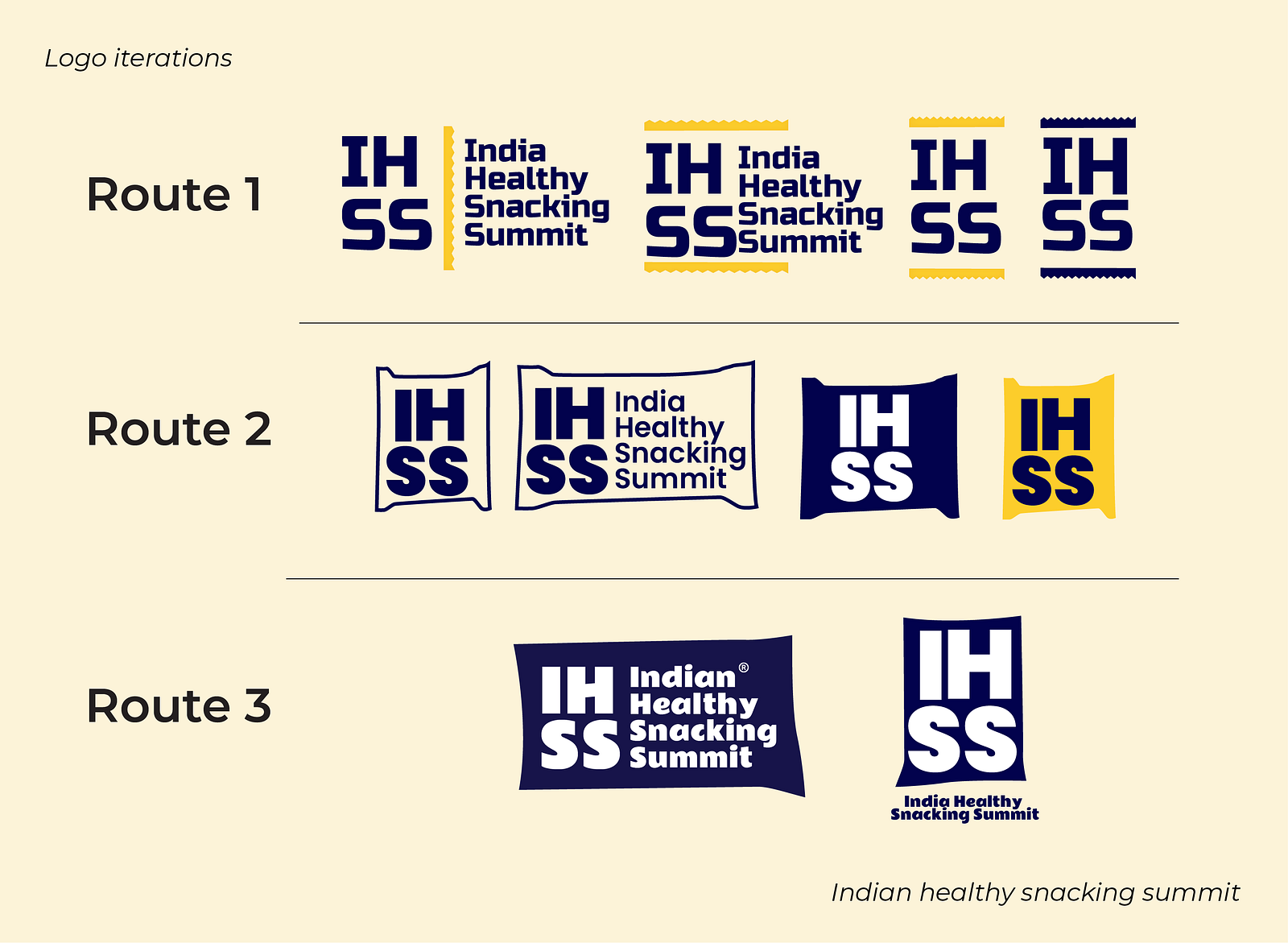
A logo that signals the category, not the brand.Three routes. Route 1 (a bar separator) read like a conference badge. Route 2 (an outline packet) was ownable but too fragile to survive a 3-metre stage backdrop. Route 3 — a bold, filled snack-packet shape with a slight flag-wave distortion — won because it works at 16px on a digital badge and at 3 metres on stage, and because the packet form references the healthy-snacking category without being any one brand's packaging. The shape says 'category,' the borrowed-not-identical yellow says 'Farmley.' Strategy, resolved in a mark.
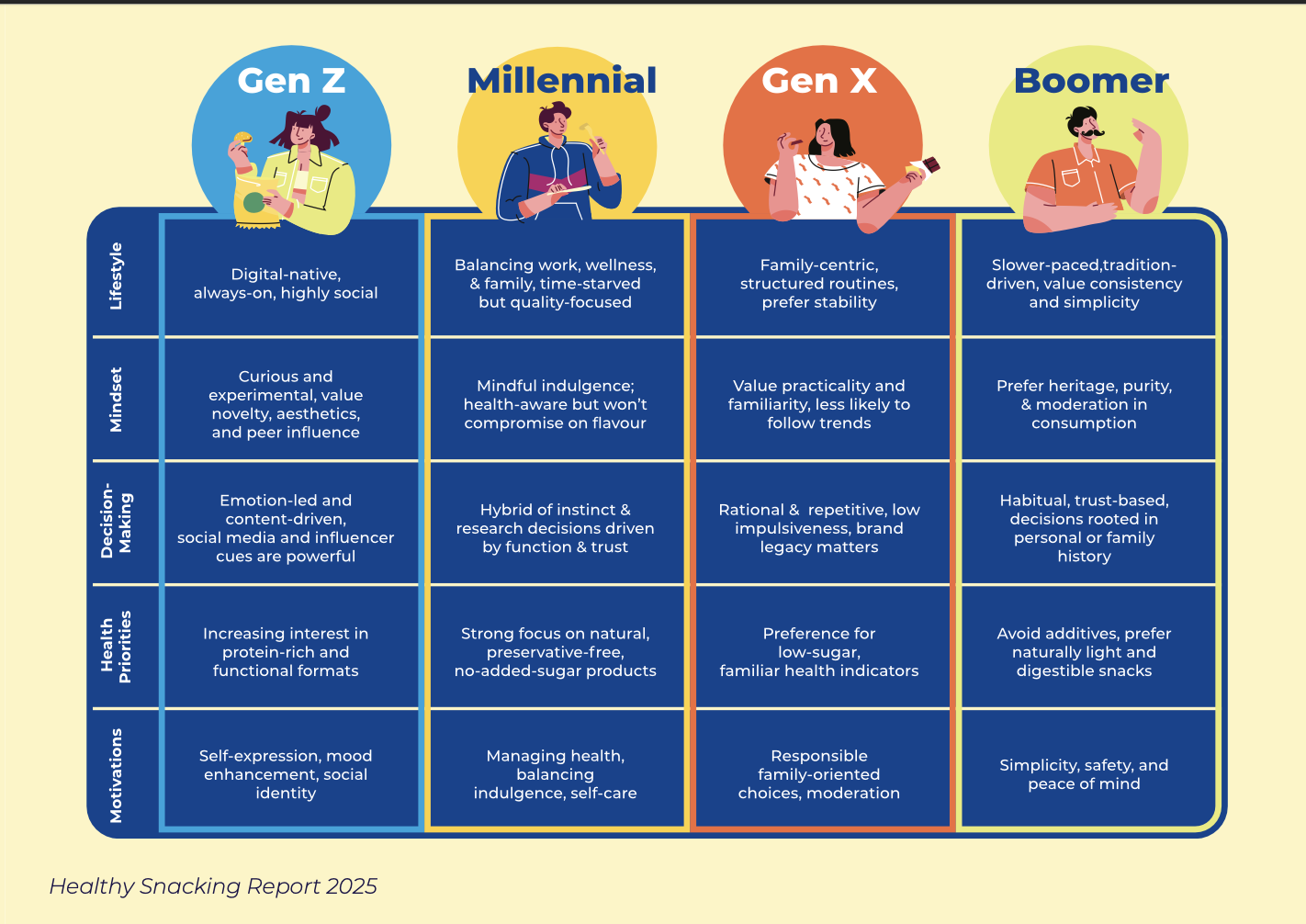
Design the report as a visual essay, not a market study.Anyone can make a report look nice. The real problem: how do you make 6,000 data points feel human? I sequenced it editorially — contradiction to insight, habit to aspiration — so it reads like a magazine you open for a peek and finish cover to cover. 71% tie evening snacking to their chai ritual; 9 in 10 want to eat more mindfully; 73% prioritise taste while 58% name cost as the barrier. That taste-versus-cost tension became the emotional core.
Make data collection double as acquisition.The 25-question survey wasn't just research — it was a D2C campaign. Pop-up booths with QR codes and free makhana, WhatsApp blasts with discount codes, social pushes with samples. The same effort that produced the report's data also collected 13,000+ first-party responses and put product in people's hands. Research as a growth mechanic, not a cost centre.
One system, two scales.Everything had to hold from a 16px badge to a 3-metre backdrop, across print and digital, then flex into a second edition without starting over. Building the identity as a system — not a one-off — is what let 2.0 evolve the language instead of rebuilding it.
IMAGE
Logo routes — 1, 2, and the chosen mark
IMAGE
Report spread — findings as a visual essay
IMAGE
WhatsApp survey invite — research as acquisition
IMAGE
Illustrator artboard — the 65-page report in production
06
It worked — and got a second edition, bigger
The clearest signal the model worked: it got a second edition, bigger.
IHSS 1.0 (2024)India Habitat Centre, New Delhi. Recognised by APEDA, Ministry of Commerce. Attended by figures like Revant Himatsingka (Food Pharmer), the Head of Swiggy Instamart, and category leads from Blinkit and Amazon. The Healthy Snacking Report launched here.
IHSS 2.0 (2025)Bharat Mandapam, with 2,000+ participants and Cabinet Minister of Food Processing Industries Shri Chirag Paswan as special guest. The venue jump from a habitat centre to India's flagship convention hall tells the scale story by itself.
2,000+ report downloadsCited in industry presentations across the country.
National mediaBusiness Standard, The Print, FoodNavigator-Asia, and others.
IHSS positioned Farmley as a thought leader in a category it already led commercially — and gave the whole industry a reason to pay attention to it.
IMAGE
Stage — Bharat Mandapam (2.0)
IMAGE
Event collaterals — ID cards & banners
IMAGE
The report, in hand
07
What I'd instrument (and do differently)
This is the honest part — and the growth-minded one. We had strong output numbers: downloads, attendees, respondents, coverage. What we didn't have was a way to measure the one goal that mattered most — did IHSS actually feel independent of Farmley to the people in the room? That perception was the whole strategic bet, and we never instrumented it.
If I ran it again, I'd build the measurement framework up front:
A post-event survey — “Who did you think organised this?”The single cleanest test of whether the independent-but-owned balance landed.
Report attribution tracking.When it's cited, is it 'the Farmley report' or 'the IHSS report'? Tells you which way the equity is flowing.
Survey-to-purchase.Of the 13,000+ who took the survey for free makhana, how many became customers? Closes the loop on research-as-acquisition.
A hard data-lock date.Some report pages were designed before the data was final, forcing last-minute layout pivots. Locking data earlier would have meant more considered infographic choices.
TL;DR — in case you jumped here
01Built an industry-first healthy snacking summit from zero — brand, 65-page report, website, and full event system — in 60 days, then did it again bigger for edition two.
02Resolved the core strategic tension: independent enough for competitors to join, unmistakably Farmley enough to earn the equity.
03Designed primary research reaching 13,000+ consumers across two editions; the method was cited in national trade press.
04The report sequenced 6,000+ survey responses into a visual essay — not a market study — cited industry-wide and downloaded 2,000+ times.
05Recognised by APEDA and Ministry of Commerce; edition 2.0 held at Bharat Mandapam with a Cabinet Minister as special guest.